Before You Co-Write . . .
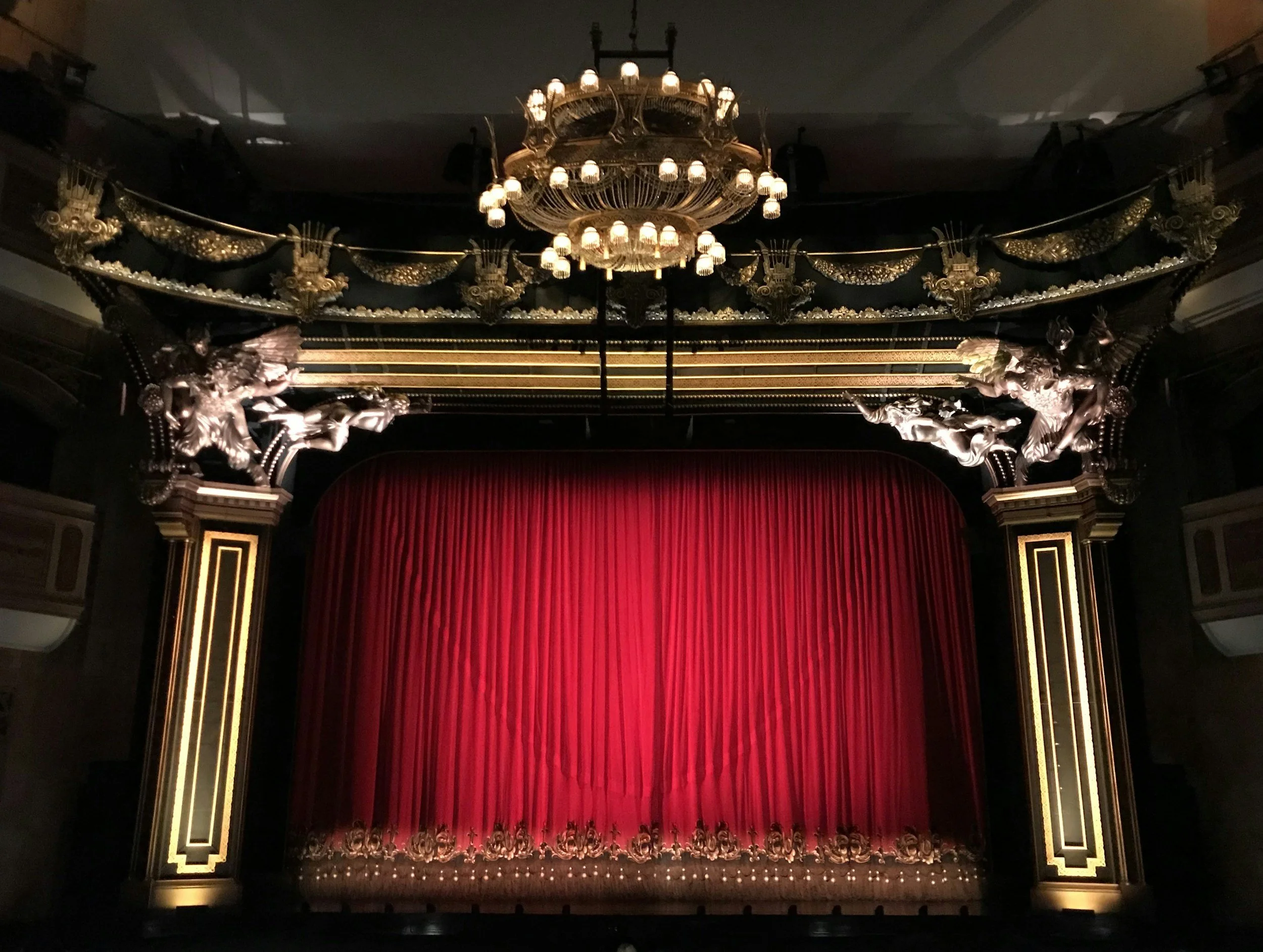
One of the most famous Broadway musicals of the 1990s, teaches a lesson to all creators about copyright ownership in joint works. Someone recently asked me about famous theatre cases, and this is one that identified a legal question that still is not fully resolved. Stay with me, because this applies to all copyrighted works, not just musicals. So, if you’re a songwriter, poet, author, painter, whatever, this is important. If you don’t know what I’m talking about yet, I’m talking about the musical RENT.
RENT is Jonathan Larson’s legacy. Tragically, he died right before its off-Broadway debut and right before it became a huge success. When he was finalizing the script, he hired a dramaturg named Lynn Thomson. Without getting into too many details, they didn’t have a formal written agreement identifying who would own what if they created something together. After the show was successful, Thomson filed a copyright infringement lawsuit and argued that she was a joint author of the musical.
At trial, it was undisputed that Thomson had made recommendations that were incorporated into the musical. That wasn’t in question. The question became: does this make her a joint author? A joint work is a work prepared by two or more authors with the intent that their work be put together to form a unified whole. Paraphrasing 17 U.S.C. § 101. That sounds simple enough, but courts in the United States are actually pretty unsure about what this means. Some courts take a broad view about this and look at a totality of factors to make a decision. E.g. Richlin v. Metro-Goldwyn-Mayer Pictures, Inc., 531 F.3d 962 (9th Cir. 2008). Others, like the court in the RENT case, focus on that word “intent.”
With RENT, the court looked at the fact that Larson had told everyone he worked with that this was his musical. He never wavered on that. No matter what anyone did, this was his musical, and he was going to be the sole author of it. Even though he admittedly liked some of Thomson’s edits and even added them to the musical, the intent he manifested was that the work was his, not a joint work. Because of this, the trial court (and later the appeals court) found that RENT was not a joint work. Thomson v. Larson, 147 F.3d 195 (2d Cir. 1998).
But that’s not the end of the story. The appeals court also said that there could be an argument that what Thomson herself created was individually copyrightable. Even though it wasn’t a joint work, if her individual contributions were uniquely copyrightable on their own, then maybe a different lawsuit could’ve been brought to address that question. Because Thomson’s lawyer didn’t argue that issue, they had to refile a new lawsuit. And that second case settled without that open question decided.
So, here’s the lesson: even if you tell everyone you work with that this is your project, that it’s your creation, that it’s your copyrightable work, you’re not done. It’s certainly helpful, but the only way to truly address all arguments of co-authorship from people who help you on your project is to have a written document that outlines exactly who owns what.
I know that as an artist it can be really hard to have these conversations with co-creators. You don’t want to put a piece of paper in front of someone that you’re working with, especially when you’re in a creative environment. But if you don’t have a written understanding when you’re working with other creators, there’s always a potential risk. You may unintentionally create a joint work or use someone else’s individually copyrighted element and putting it inside of yours.
Entertainment lawyers like me would love to have another case addressing the question left open by the RENT court: how do we know when individual contributions are individually copyrightable? An answer to that question would be great. But, as a creator, you don’t want to be the name tied to the next famous court case. Avoid that by making sure you have a written agreement (ideally, drafted by a lawyer familiar with that kind of art) before making a collaborative work.

Parody & Satire: To Use or Not to Use
In copyright law, one area where this really matters is the legal distinction between parody and satire. Mixing up these two words can have huge consequences for creators.
If you’ve been told that you can use copyrighted works for satire without infringing, this is for you.
One of the most annoying things about lawyers is that they (myself included) are extremely particular about words. Terms that have one meaning in everyday language can carry a lot of baggage when used in law. In copyright law, one area where this really matters is the legal distinction between parody and satire. Mixing up these two words can have huge consequences for creators.
In copyright law, a parody is a work of art that directly criticizes the work it uses. In other words, the parody must make fun of the original work. Satire, on the other hand, uses an existing work to poke fun at something else entirely. If the copyrighted work is being used to comment on society (or anything other than the work itself), it’s satire—not parody.
Why does this matter? Because parody is usually protected under fair use, while satire usually is not.
Generally speaking, parodies are protected as a form of fair use—legal protection for certain uses of copyrighted works that would otherwise be considered infringement. While fair use is always a case-by-case analysis, true parodies tend to satisfy the four-factor test. By making fun of the original work, the parody doesn’t compete with the commercial value of that work. And because it directly critiques the original, courts are more likely to find the use transformative—and thus fair.
Satire leans in the opposite direction. In copyright law, satire uses copyrighted material to make fun of something other than the material it borrows. It relies on familiar works not to critique them, but because they make the satirist’s broader point more effectively. In this context, the use starts to look more like a derivative work—which is the exclusive right of the copyright holder—not fair use.
The Supreme Court formalized this distinction in Campbell v. Acuff-Rose Music, 510 U.S. 569 (1994). In that case, the band 2 Live Crew successfully argued that their version of Roy Orbison’s “Pretty Woman” was a parody and therefore fair use. That Supreme Court win was significant—but it required an incredibly nuanced argument. The lawyers for 2 Live Crew demonstrated that their modified lyrics were directly making fun of Orbison’s original. The Court agreed and found the lyrics to be a transformative parody.
Opinions may differ on whether the Court got it right, but the holding still stands.
Representing artists and creators, I regularly hear people using “parody” and “satire” interchangeably. But in copyright law, these words carry very different meanings. A parody is usually protected under fair use; satire usually isn’t. Still, as with most things in law, these conclusions aren’t always black and white. There’s nuance.
Helping my clients navigate that nuance is one of my favorite parts of being an entertainment attorney

NIL Rundown: Name Image & Likeness and the Right of Publicity
What is NIL?
If you’re an athlete or the parent of an athlete, you’ve probably heard about NIL. But if your knowledge stops there, here’s a brief rundown of what it is and how it fits into the landscape of college athletics.
The Law of NIL
NIL is nothing new. States have long recognized the right of publicity, which protects your right to control the recognizable aspects of your identity from being used improperly by others. Essentially, we all have the ability to prevent businesses from using our name, image, and likeness (NIL) for commercial purposes without permission.
The key word here is commercial. For example, while you typically can’t prevent a news outlet from filming you in a public place, you usually can stop a car dealership from using your smiling face on a billboard without your consent.
As you probably know, the value of this right of publicity comes from celebrity endorsements. Brands are willing to pay well-known athletes large sums of money to license their NIL for promotional purposes. While anyone can license their NIL, the price depends on demand—meaning a national sports star’s NIL is worth significantly more than that of a local or regional athlete. Each NIL deal is unique, not because the law itself has changed, but because the value of an endorsement depends on the athlete and the brand involved.
NIL for Student-Athletes
While the right of publicity has remained the same, the rules for student-athletes have changed. Today, “NIL” has become shorthand for the ability of college athletes to profit from their name, image, and likeness.
Until recently, NCAA rules prohibited student-athletes from making money through NIL deals. That all changed after NCAA v. Alston, 141 S. Ct. 2141 (2021), which led to a shift in NCAA policy, allowing athletes to enter into brand partnerships. Now, student-athletes can monetize their NIL, but the regulations governing these deals vary by state, school, and even individual conference—and they may continue to evolve.
To stay compliant, college athletes need to stay up to date on NCAA rules and state laws before entering into any NIL agreements. Some key requirements include:
• NCAA regulations, such as reporting certain NIL contracts to the organization.
• University-specific policies, which may include reporting obligations or mandatory educational courses on NIL.
• State legislation, which continues to change as lawmakers refine NIL guidelines.
Because of these complexities, student-athletes should consult an attorney knowledgeable in NIL laws in their school’s state before signing any agreements.
NIL as a Recruitment Tool
One of the unintended (though predictable) consequences of changing NIL rules is their use in college recruitment. Universities have long relied on booster clubs—groups of wealthy alumni and supporters who financially back athletic programs—to support their teams. Now, these boosters can play a direct role in NIL deals, helping attract top recruits with lucrative endorsement opportunities. This comes with its own issues, as high profile recruits have had their university commitments flipped with promises of NIL earnings that may or may not have been honored.
A cynical view of NIL would argue that some colleges use sham NIL deals as a way to compensate athletes without violating other NCAA rules. While NIL was originally intended to allow student-athletes to benefit from their publicity rights, it has also become a powerful tool in the competitive world of college recruiting.
The Big Takeaway
At its core, NIL is simply the same right of publicity that has allowed athletes and public figures to profit from endorsements for decades. The only real change is that NCAA athletes can now participate in these deals, whereas before, they could not.
For student-athletes, the most important thing is staying informed. NCAA policies, state laws, and university rules are constantly evolving, and failing to comply could put an athlete’s eligibility at risk. As with any contract, consulting a knowledgeable attorney before signing an NIL deal is essential.

Understanding Fair Use in Copyright Law
If you’re a musicians or a content creator, you’ve heard about fair use. And, chances are, you’ve heard a lot of misinformation. Let’s fix that. I’m an entertainment attorney, and I went to law school so you don’t have to. Here’s a brief rundown on what fair use is and what you need to know about it as an artist.
If you’re a musician or a content creator, you’ve heard about fair use. And, chances are, you’ve heard a lot of misinformation. Let’s fix that. I’m an entertainment attorney, and I went to law school so you don’t have to. Here’s a brief rundown on what fair use is, and, just as importantly, what it isn’t.
What is Fair Use?
Copyright owners have certain exclusive rights to use their works in the way that they want and, importantly, to prevent others from doing so. See 17 U.S.C. Section 106. If someone violates those exclusive rights, it’s an infringement.
Fair use, when it applies, allows someone to use copyrighted works without permission from the copyright holder. That’s a pretty big deal! So let’s make sure we understand what we’re talking about. Examples of presumptive fair use categories include criticism or commentary on the work itself, news reporting, teaching, scholarship, or research. But who actually decides if something fits into those categories? Who decides what is or isn’t fair use? Courts.
In practice, fair use shows up as an affirmative defense to a lawsuit for copyright infringement. E.g., Golan v. Holder, 565 U.S. 302, 328 (2012). An affirmative defense bars a claim—but it does not stop the lawsuit from happening. The person claiming a defense has the burden to prove that defense. A defense is not automatic just because you claim it. A defendant in a lawsuit actually has to present their defense in court. And until a court rules on it, a defense is just a defense—nothing more. Courts are required to assess every fair use defense individually and analyze them one by one under the same test.
(Note that if a court rules something to be fair use, it is, by definition, not an infringement. As such, some lawyers argue over whether it should be categorized as a defense or not. Whether it is or isn’t technically a “defense,” it almost always shows up in court as a defense. So we will talk about it that way.)
The test for fair use looks at different factors and analyzes the specific use of a copyrighted work in question piece by piece. Some claims of fair use are really strong, others are weak, but none are a 100% certainty. Some To understand why, let’s look at the law of fair use.
Courts decide questions of fair use on a case-by-case basis—not in the abstract. The law gives courts four non-exclusive factors to consider:
(1) The purpose and character of the use;
(2) The nature of the copyrighted work;
(3) The amount and substantiality of the portion used in relation to the copyrighted work as a whole; and
(4) The effect of the use upon the potential market for the copyrighted work.
I could recite these to you all day long, but that doesn’t help you understand them any better. So let’s look at an example to see how these work.
Example: John’s Music Review Podcast
John is a podcaster who reviews new music. John has a background as a classical vocalist, and his followers love listening to his opinions on the voices of new artists. Saylor Twift releases a new song, and John reviews it on his podcast. The podcast is fifteen minutes long, and John uses about five seconds of audio from the bridge of Saylor’s new song. He specifically uses the five seconds of audio to explain how he loves the way she belted a certain note. Fair use?
Your gut probably tells you this is fair use, but let’s understand why:
Factor (1) The Purpose and Character of the Use.
Here, John is using the work to discuss Saylor’s singing technique and for the purposes of commentary or critique. Remember, this is a type of use that the fair use statute considers presumptively fair use. As such, Factor (1) probably points toward fair use.
Factor (2): The Nature of the Copyrighted Work.
This factor looks at whether the work is more factual or creative. Uses of factual works are more likely to be considered fair use than uses of highly creative works. Here, John’s use is of a piece of a song—something highly creative. As such, Factor (2) likely points against fair use.
Factor (3): The Amount and Substantiality of the Portion Used.
John uses around five seconds of audio to discuss a particular note. The podcast is fifteen minutes long. The smaller the portion of the work used, the more it looks like fair use. Now, it’s possible that five seconds could be such a vital piece of the song that it is a “substantial” use. But to keep it simple, let’s assume that five seconds of this song is not a substantial use. As such, Factor (3) probably points toward fair use.
Factor (4): The Effect on the Market.
This factor looks at whether John’s use would affect the market for Saylor’s song. The market for songs is usually connected to the song as a whole. There can be exceptions, however, but in this instance, the listeners of John’s podcast are there to hear his thoughts and commentary. They’re most likely not listening to the podcast to hear John’s thoughts, not Saylor’s song. And the use is primarily for critique of the song itself. As such, Factor (4) likely points toward fair use.
Taken together, we have three factors that point toward fair use and one that points against it. It is likely that, in this situation, John’s claim of fair use would be successful.
How Context Changes Fair Use
Think about just how quickly this analysis could shift against fair use if we change a few things. Imagine if John was using the same five-second clip as a theme song for his podcast. That kind of use suddenly points against fair use in both Factor (1) and Factor (4), shifting the ultimate result.
How?
• Factor (1): The character of the use becomes commercial. Even if John comments on the song, a theme for a podcast is most likely a commercial use.
• Factor (4): The market for the song is directly harmed because theme songs are a major source of revenue for music.
By changing the context of the use, the same clip of the same song in the same podcast looks far less like fair use. The question of fair use always hinges on the specific facts of the case.
The Bottom Line
When people speak in absolutes about fair use, they are missing the point. No one knows for sure if something is or isn’t fair use until a court rules on it. While there certainly are examples where something is most likely fair use, it is incorrect to say something is definitely fair use. Arguments can always be made one way or another, and some are better than others. But, ultimately, a lawsuit has to be brought to determine if the fair use claim is successful.
To analyze a case, you have to go through the factors and reach a likely conclusion. The conclusion can be a “most likely” conclusion, but, unless you’re a sitting judge or jury, it should never be an absolute yes or no.
As an attorney representing creators, I come across fair use issues all the time. I love helping my clients understand the legal framework behind their issue so they can make the best decisions for their careers. One thing I always reiterate to my clients is that you do not need to become an expert on legal issues like fair use. Rather, you just need to know when something could be an issue.
As a creator, you should be creating—not spending your time analyzing legal claims. The takeaway here is not knowing exactly what is or isn’t fair use. The most important thing to understand is that fair use is complicated and always hinges on the specific facts of each case.